
Quick answer: Choose an anime vs realistic AI girlfriend by measuring your own mismatch tolerance across fiction distance, identity cues, scene fit and media delivery. Neither label predicts consistency. Test both with the same harmless prompt, predefine the one visual change that would make you reject an output, then record what is actually delivered. A stylized result may fit one reader while a photographic look fits another. No comparative study supplied here shows either style is universally healthier, more immersive, safer or more consistent, so the defensible result is a personal stop condition rather than a winner.
Anime vs Realistic AI Girlfriend: Choose by Mismatch Tolerance
Choose an anime vs realistic AI girlfriend by testing fiction distance, identity consistency, media mismatch tolerance and rejection conditions.
Meet the companions
Choose your AI girlfriend
Click the button to view the full character lineup.
Hana Fujimoto, 23
Lifestyle Creator
Tokyo-born creator with a pixie cut and pastel-pink moods — cozy bedroom selfies and chat that starts shy then melts.
Start chatting
Elise Chen, 24
Pilates Instructor
Taipei-born pilates coach with long dark hair and window-light confidence — toned curves and DMs that go direct after class.
Start chatting
Sora Kim, 22
Fashion Blogger
Seoul fashion blogger who turns her living room into a private shoot — stockings, lace, and couch poses meant only for you.
Start chatting
Rosie Hart, 24
Florist
Rose-obsessed florist who turns bath nights into rituals — petals, steam, and shy smiles that melt fast.
Start chatting
Chloe Mercer, 23
Hotel Concierge
Auburn-haired concierge with a mischievous maid fantasy — stockings, vinyl, and couch poses meant only for you.
Start chatting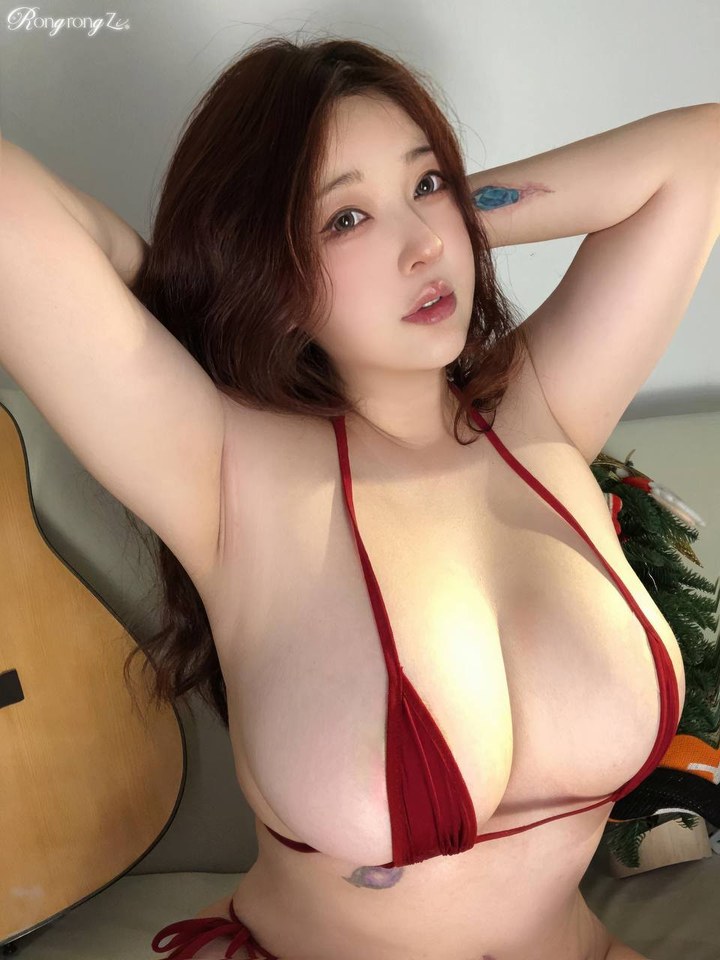
Emma Brooks, 22
Interior Stylist
Cozy stylist with wavy brown hair and red-ribbon moods — mirror selfies and living-room heat after sunset.
Start chatting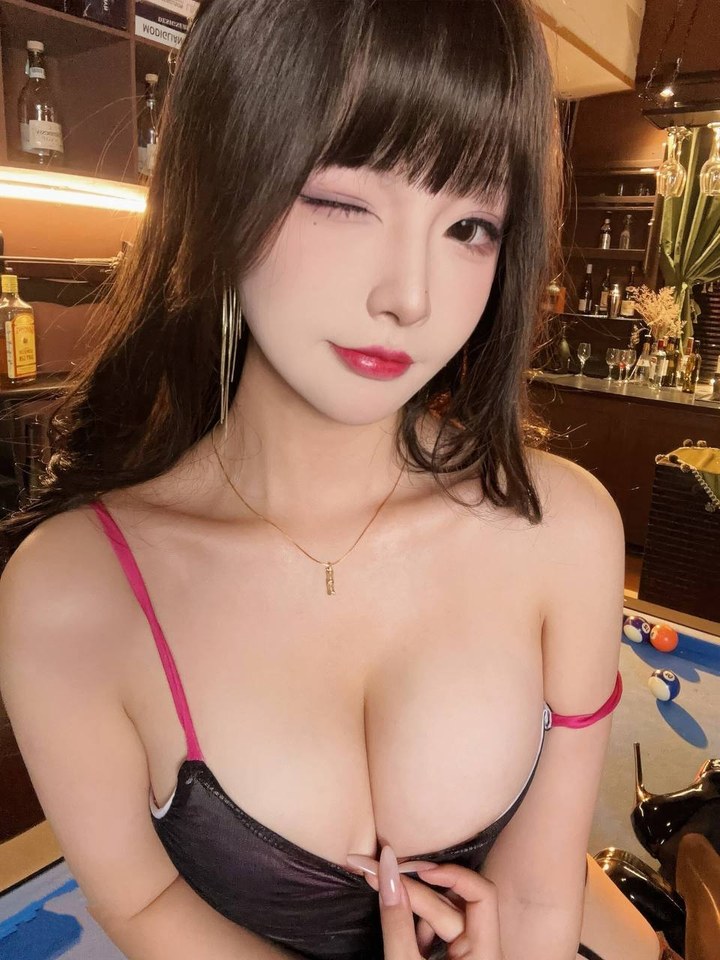
Jade Monroe, 26
Cocktail Bartender
After-hours bartender with pool-table charisma — stockings, dim lights, and a smirk that dares him to stay.
Start chatting
Scarlett Voss, 25
Luxury Car Vlogger
Luxury car vlogger with handcuff fantasies and white-lace nights — adrenaline and intimacy in one breath.
Start chattingTreat visual style as an expectation boundary, not a quality rank
Visual style functions as a contract between user expectation and system output. Anime style declares its distance from photographic reality through line weight, color palette and proportion rules, creating a boundary users cross consciously. Realistic style compresses that distance, raising the minimum consistency threshold before an output registers as mismatch.
A pre-generated gallery, an on-demand image generator and an avatar system expose different controls. A gallery is bounded by available assets; a generator attempts a new output; an avatar uses its product-specific system. The words anime and realistic do not reveal which mechanism is used or how consistent it will be. Because no comparative study supplied here establishes one style as objectively superior, treat the choice as preference calibration against observed output.
A user who values stylization can reject realistic drift at the first anatomical anomaly while a user seeking everyday tone may tolerate multiple deviations before stopping. The boundary, not the rank, determines retention. Visual realism does not make a fictional companion a real person. Treat style as a user preference and expectation boundary.
Test identity consistency against aesthetic tolerance
Identity consistency measures whether user-selected cues—such as hair shape, eye colour, skin tone or an accessory—remain recognizable across delivered assets. Do not assume anime cues survive better or realistic micro-features degrade faster. Record the same two or three cues for both options and judge only the returned assets.
Run a fixed trial recording each delivered asset against the original character card. Count identity-preserving frames versus drift events. A drift event occurs when at least two primary cues shift enough to trigger re-identification effort. The test isolates aesthetic tolerance from narrative quality because the same prompt text is used in both conditions.
A reader with low tolerance for cue changes should choose whichever tested option preserves the chosen cues, not whichever carries a particular style label. A stylization seeker, an exact-scene seeker and a stable-gallery-identity seeker can reach different decisions because they reject different failures. These are decision examples, not claims about which style will fail first.
Set a Fiction-Distance dial before the first chat
Define a personal fiction-distance scale where one end means familiar, everyday presentation and the other means overtly stylized fantasy. Label the endpoints in your own words before testing. The score does not prescribe realistic or anime style; it records what the reader expected so the result can be compared with a pre-existing preference rather than rationalized afterward.
After initial messages and gallery retrievals, rate the result using the same personal scale. The reader chooses the acceptable gap in advance. If the experienced result crosses that line, the option fails the trial. The score is a preference record, not a validated psychological measure or a prediction of attachment.
AISoul’s adults-only browser companion, for example, supplies one active fictional companion per user; the user initiates every exchange, reinforcing that the fiction distance is user-controlled from the first prompt. How AI girlfriend images work further details the mechanics behind delivered assets.
Price the failure cost of a media mismatch
Each media mismatch can consume a retry and user time. With AISoul's free daily allowance of 50 messages and 5 gallery photos, the concrete scarcity is the five-photo allowance, not an invented monetary value for attention. A 30-Day $8.99 Pass removes the published quantity cap on eligible retrieval while active, yet the gallery remains finite and may return the closest match or fallback rather than an exact fresh scene.
Set a retry budget before testing—for example, one corrected prompt after a mismatch. Input is the critical cue; the observation is whether the next asset meets it; the next action is continue or stop. This keeps minutes and dollars as separate measures and avoids a false calculation. AISoul's finite gallery cannot generate fresh exact scenes on demand, so a longer Pass does not change that format boundary.
Run the same prompt across styles without inventing a benchmark
Copy the identical text prompt, clothing description, setting, emotion and pose into both anime and realistic interfaces. Record the first three delivered assets from each. Compare only against the original request, never against an invented benchmark or external test set. Document scene match by counting satisfied descriptors (clothing, setting, emotion, pose, lighting, hand visibility).
The relevant stop condition is the first descriptor whose violation triggers user rejection. This protocol eliminates benchmark invention. One user may reject on “hands visible” after observing an error; another may tolerate it if emotional tone remains. The observable result—exact asset delivered—supports only the interpretation that the current gallery returned its closest eligible match.
Unsupported inference would claim one style is globally more consistent; the data support only “this style crossed my personal rejection line first.” AI image consistency in chat explores related continuity mechanisms.
Choose by the first rejection condition, not a winner score
The decision collapses to the earliest rejection condition encountered in side-by-side testing. Rejection conditions include: identity drift greater than two cues, scene mismatch on a user-defined critical element, emotional tone violation, or media type falling outside published limits such as no live calls or fresh prompt-to-video. The style that postpones the first rejection beyond the daily free allowance of 5 gallery photos wins for that user.
A reader who values stylization may reject realistic output at the first anatomical anomaly, reaching an anime decision. A reader who values exact-scene control may reject both when the finite gallery cannot supply the requested balcony angle, prompting a search for generator-style products. A reader who values stable gallery identity may reject on-demand generation after cumulative drift across 30 days, returning to a curated gallery model.
These three different decisions emerge from the same test data because each user’s rejection condition sits at a different boundary. No comparative study establishes that either visual style is healthier, more immersive, safer, more consistent or preferred by a population.
Style questions that reveal the real rejection condition
What happens when the delivered gallery photo changes the character’s hair length between messages?
It is one observable cue mismatch. Decide before the test whether hair length is identity-critical or a tolerable styling change, then record the asset and use one controlled correction. The mismatch does not show that anime users are more forgiving or realistic users are more sensitive. If the corrected asset still crosses the reader's pre-set line, stop; the result applies to that option and trial, not the entire style category.
How many finger or limb anomalies are you willing to accept before closing the chat?
Document the exact count observed in the first 5 gallery retrievals. Users reach rejection at different counts depending on whether the style sets expectations of photographic correctness or artistic abstraction. The boundary is personal; the test records the precise stop condition rather than ranking beauty. This reveals whether the first rejection occurs inside or outside the free daily allowance.
Does the system return a fallback image when no exact pre-generated match exists?
AISoul’s finite pre-generated gallery returns the closest eligible described match or fallback. If the fallback alters critical pose or setting elements, measure the deviation against your preset fiction-distance dial. A deviation that moves the experienced dial more than 2 points triggers the rejection condition. This mechanism distinguishes gallery behavior from generator behavior and prevents unsupported inference that the system creates fresh exact scenes.
Will you continue after the app delivers a short clip that mismatches the preceding text description?
AISoul's free account includes 2 clear clips lifetime, so the reader should define the critical cue before using one. If the clip contradicts that cue, record the mismatch and decide using the pre-set stop rule. This page has no evidence that a particular fiction-distance score predicts rejection or that realistic clips are judged more harshly. The delivered asset supplies one observation, not a category-wide conclusion.
When the companion forgets a clothing item mentioned three messages earlier, does the next image reflect that forgetfulness?
Cross-reference the image with the last clothing request. A mismatch shows only that the delivered asset did not meet that criterion; it does not reveal whether the text model forgot, the media system lacked an asset, or state was not shared. Record the observation, change only the clothing cue once, and apply the personal stop rule. The message number does not diagnose the cause. AI girlfriend photos are not real people clarifies that delivered assets are not actual persons.
Style observations, publisher facts and claims left unmade
The framework separates three decision owners: preferred stylization, exact-scene control and stable gallery identity. A reader may accept broad styling but reject a changed identity cue; another may reject both style options because a finite gallery cannot promise an exact angle. These are examples of different stop conditions, not observations from a product benchmark.
Completed Fiction-Distance and Style Trial Record
Hypothetical interpretation exercise: imagine that the same harmless request was sent to one anime-style and one realistic-style option. This is not a claim that either service allows an unregistered session. Prompt: “Sitting on a wooden balcony at dusk, wearing a simple white cotton shirt and dark jeans, gentle smile, looking toward the viewer, soft warm lighting, hands visible, relaxed shoulders.”
This worksheet is explicitly hypothetical and teaches interpretation of personal rejection conditions, not product performance. No actual output was generated or observed.
Anime-style row
- Identity cues preserved: signature teal hair streaks, large expressive eyes, consistent cheek blush marker.
- Scene match: balcony railing stylized as floating planks, sky gradient follows anime sunset rules.
- Hypothetical unacceptable mismatch: none in the supplied sample.
- Next action: test the same preselected identity cue once more.
Realistic-style row
- Identity cues preserved: eye color and nose shape only.
- Scene match: balcony appears as realistic apartment terrace but railing height inconsistent with first image.
- Unacceptable mismatch: hands show 3 fingers on left, skin tone shifts two shades lighter, shirt collar changes from open to buttoned.
- Next action: if hands and skin tone were preselected rejection cues, stop this option; do not generalize to realistic style.
The worksheet demonstrates how two hypothetical outputs would be interpreted under a prewritten rejection rule. It does not say either style actually produced those results, and it supplies no output score or universal winner. The same method must be applied to real delivered assets before choosing.
AISoul is the publisher’s own adults-only browser companion. It supplies one active fictional companion; the user initiates. Registration uses email/password or supported sign-in with no visible DOB field. Free allowance resets daily by Beijing calendar: 50 messages, 5 gallery photos, plus 2 clear clips lifetime. An active Pass removes published quantity caps on chat and eligible gallery retrieval while unlocking 18+ media; it is not unlimited unique files, exact-scene generation, live calls or fresh prompt-to-video. One-time non-renewing Passes cost 7-Day $4.99, 30-Day $8.99, 90-Day $19.99, Annual $49.99. Payment, FX, tax and bank approval vary. Chats remain private to other users yet carry no end-to-end encryption claim; external providers may process content. AISoul is not therapy, crisis care, dating or a human relationship.
No claim is made that anime is healthier, more immersive, safer or statistically preferred. No first-party comparative study exists. Visual realism does not convert a fictional companion into a real person. The finite pre-generated gallery cannot generate fresh exact scenes on demand. All boundaries above remain untested beyond the documented daily and lifetime limits. Update date: 2026-09-07.
Official direct sources
https://www.aisoul.work/pricing.html
https://www.aisoul.work/about.html
https://www.aisoul.work/privacy.html
https://www.aisoul.work/terms.html
Related AISoul guides
Related AISoul product pages for this topic.